WELCOME TO THE
CHROMATIN REMODELING LABORATORY (CRL)

Mechanism of ATP hydrolysis:
Active DNA-dependent ATPase domain (ADAAD) is an 82-kDa polypeptide derived from DNA-dependent ATPase A. ADAAD hydrolysis ATP only in the presence of DNA molecules containing double-stranded to single-stranded transition regions (Fig 1).
The first question we asked was why these molecules in particular? Why cannot ADAAD hydrolyse ATP in the presence of single-stranded or double-stranded DNA?
Fluorescence studies, done in collaboration with Dr. Sneha Sudha Komath, suggest that the answer lies in conformational changes that the protein undergoes. When the appropriate DNA binds to the protein, it forces it to adopt a conformation that is conducive for ATP hydrolysis.
ADAAD has eight conserved motifs (Fig.2). Where does ATP bind? Where does DNA bind? How does ATP hydrolysis take place?
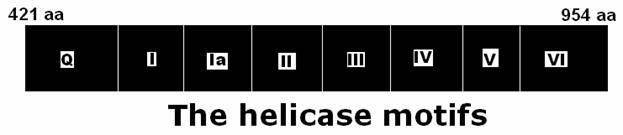
Using deletion constructs and site-directed mutagenesis, we have created alanine scanning mutants. Each of these mutants are being analysed for ATP binding, DNA binding, and ATP hydrolysis.