WELCOME TO THE
CHROMATIN REMODELING LABORATORY (CRL)

ADAADi, an inhibitor of the ATP-dependent chromatin remodeling process:
Aminoglycosides are potent inhibitors of protein translation in bacteria. They bind to 16S RNA and inhibit the translation machinery. Of course, bacteria have evolved many mechanisms to overcome this effect. One of the ways they do it is by using an enzyme called Aminoglycoside phosphotransferase. This enzyme transfers the phosphate group to the aminoglycoside and in this process generates two molecules: i) the well-characterized phosphoaminoglycoside; ii) the uncharacterised ADAADi.
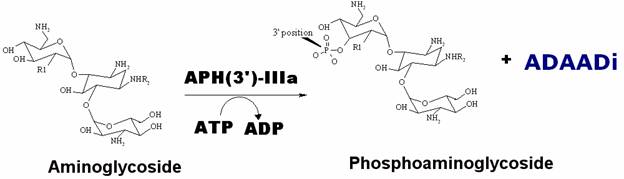
ADAADi is an allosteric inhibitor of the SWI/SNF proteins. In our lab we have shown that it binds to motif Ia and thereby induces a conformation in the protein that does not allow ATP to be hydrolysed.
ADAADi is interesting because it kills cancer cells as well as parasites. Can we exploit the differences between the cancer cells and parasites to generate that would specifically kill one the parasites but not have an effect on human cells? That is the direction in which we are currently moving.